
Rebuilding Saiku
An experiment with AI

Years ago, I used to run a commercial open source OLAP tool called Saiku. It went alongside, and sometimes inside, the Pentaho BI platform and allowed business folks to do drag-and-drop analysis of their data in a time when this type of analytics didn’t happen a great deal, and when it did, it was almost all proprietary.

At the time, we had lots of users, but not many people committing code or money to keep the platform afloat. It worked pretty well for lead gen, but it was also a huge time suck, and even though we had users from Amazon, Samsung, etc., converting them to any model that would support development was impossible.
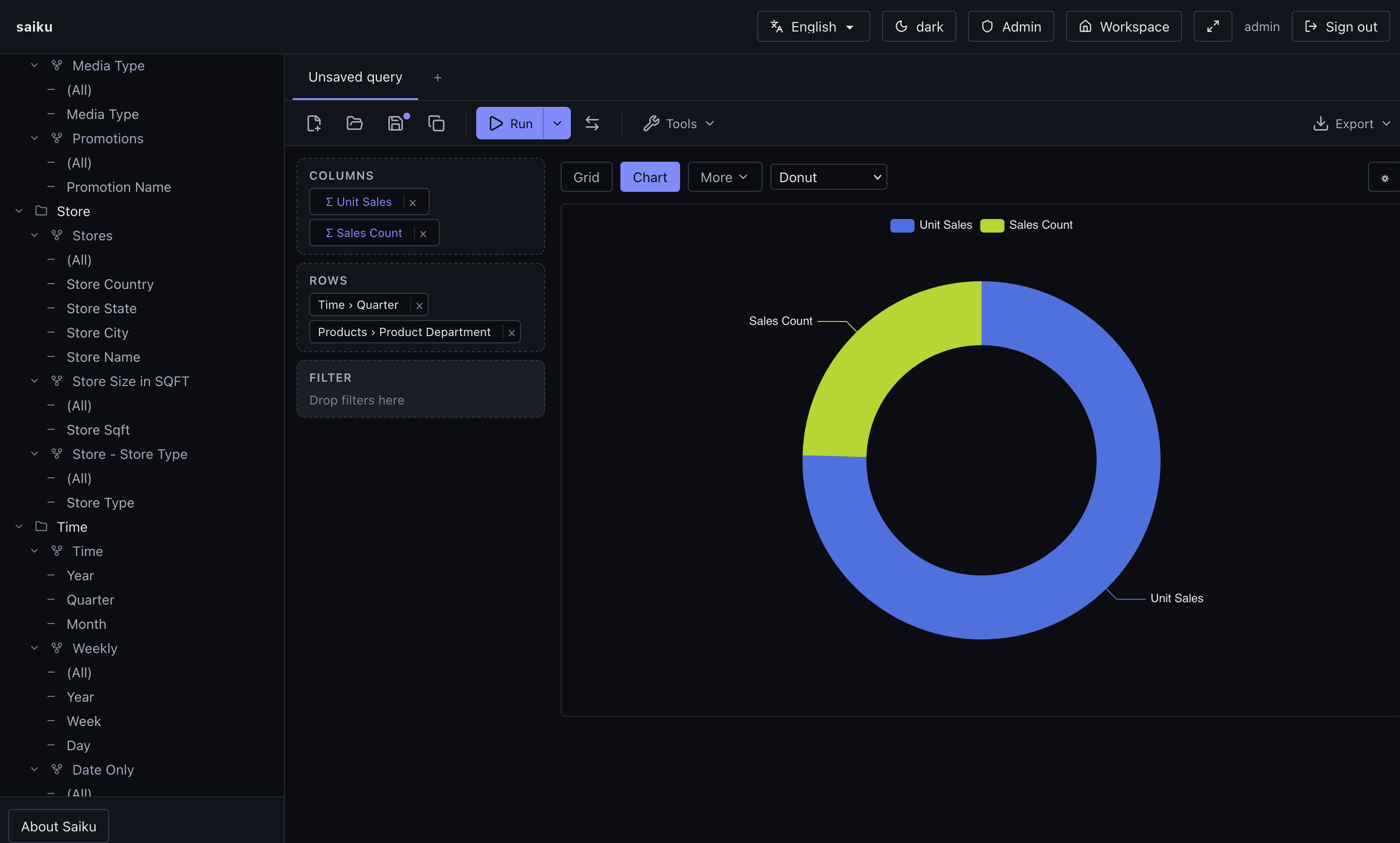
So after years of being almost broke, I gave up and went to work for NASA, much to the chagrin of the people using the platform, which is ironic when you’re being blasted for not supporting the platform when others refuse to commit.
Fast forward to 2026 and the year of the Agentic AI agent, and I thought, “ Hell, I wonder if this thing even compiles. So I set Claude free on it and asked him to get the old version running. To my surprise, about 30 minutes later, he had a running version on my Mac. So then I thought, well, what else could I do with this? So I asked him to update the main dependencies, etc., and write tests to ensure it continued working. All seemed good.
So then I thought, well, the UI is a bit dated, it’s still cool and works really well, but there are so many different frameworks available these days, how about we just rebuild it? So I left him rebuilding the UI using Svelte, as it’s a framework I’m comfortable with. Once again, a few hours later, and after a few prompts to tweak it, Saiku had a new UI built with the latest in modern web technologies.
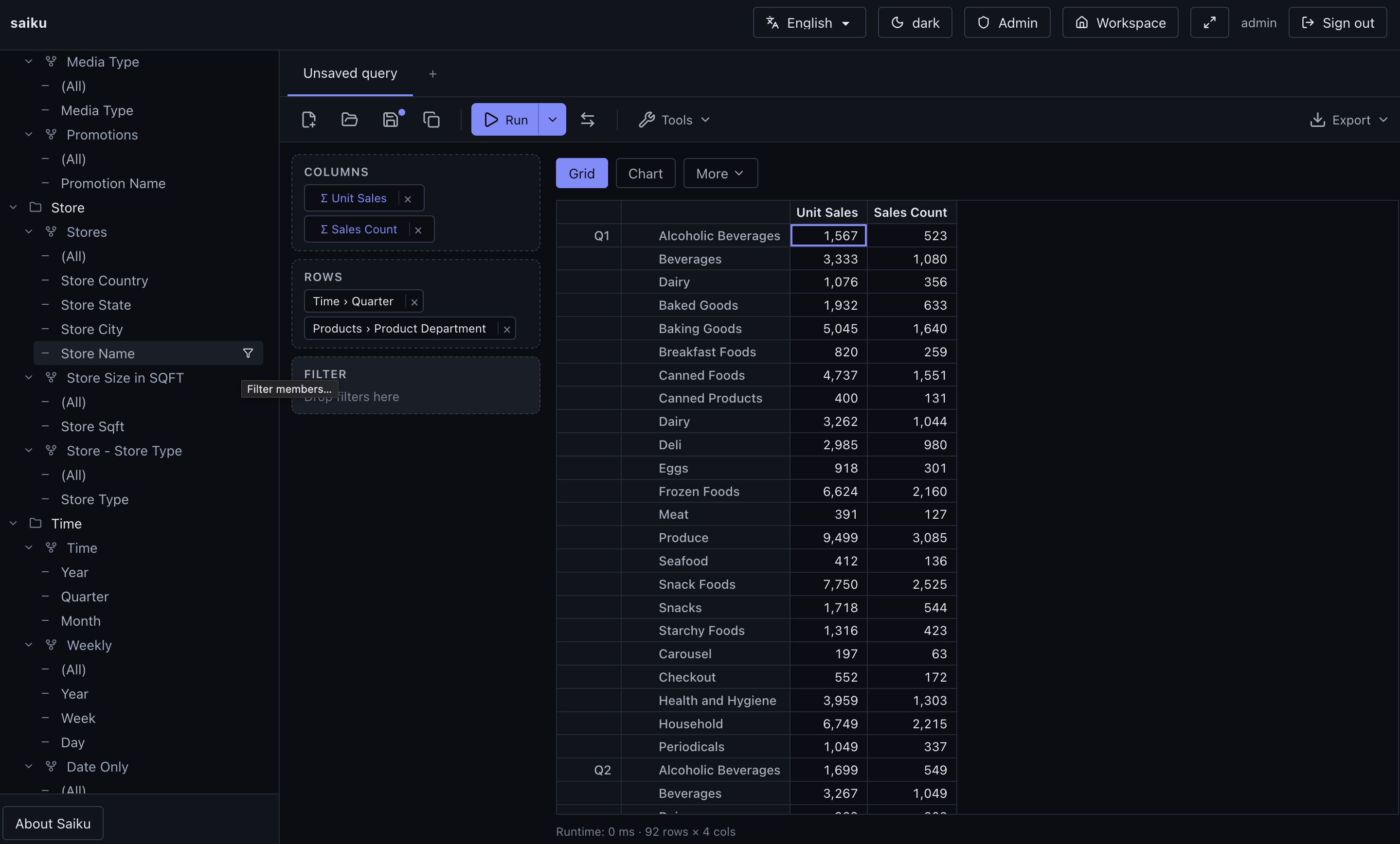
This continued for a bit longer, and then I went deep on what I could do with Mondrian, the OLAP engine that powers Saiku. We use version 4, which has a story of its own, but I also want to update it and improve support for newer databases, so I added Apache Calcite to the query-generating layer and blogged about it here.
So, of course, this then brings me to now. This happened a few weeks ago, and now I have a couple of weeks of vacation, which we all know really means “time to finish up those projects we started but never finished”. And so I decided to release it. It’s not particularly well tested yet, but most functions work. I would like to do more to it. I’m not sure yet, but I’m working on something to make it easier to build out the OLAP cube specs. I’ve already started with some AI help and support for Cube building. But I’m sure there is still more to do, some may be AI-based, some just improved support and functionality.
Of course, the question is: in the year 2026, does OLAP still serve a purpose? Do small or big businesses need something like Saiku? I don’t know if the answer is. But I figured, having got this far, I should release it, make it accessible and pay a bit of respect to a piece of software that launched my career, and helped get me to where I am today.